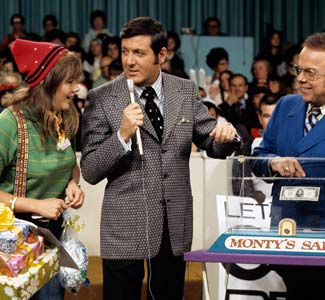
 When a D&D podcaster recently made a familiar pop reference, I was reminded just how old skool I actually am. With D&D’s current popularity, it’s hard for me to fully appreciate that the majority of D&D players won’t immediately recognize the guy in this photo.
I think the cultural differences between these two generations of D&D players merits serious consideration.
I started playing 1st Edition AD&D back in 1981. The more I learn about 5th Edition D&D, the more I’m annoyed with I really hate just how player-friendly, politically correct, and consequence-free the developers have made this game.
Alignment has been neutered and racial class restrictions and biases have been removed, so play whatever class and race combination you like to whatever level you like, because characters are surprisingly homogenous. Want to max out some stats of your character’s stats? Can do!—just level up a bit and take a few Feats. Curses and diseases are minor inconveniences in this new system, easily cured by any low level cleric. Is immediate gratification important to you? No problemo!—simply concentrating on a magical item will usually reveal all of its mysteries. And taking a quick nap will get even the most severely wounded hero right back in the game!
I’m still working to get my bearings on the staggering number of the changes 5th Edition D&D presents, so my list of gripes is incomplete. It occurs to me that new skool Millennials are likely to be accustomed to a very different kind of roleplaying experience. They may not have a reference to truly appreciate just how laughable a +10 vorpal weapon is, or to fully value the accomplishment of leveling a 1st-level character all the way up to 3rd level.
I’m considering the differences in the D&D games people are playing. D&D Adventurers League events and local D&D Meetup events—such as The Seattle Dungeons & Dragons and RPG Meetup Group—would seem to indicate that there’s a lot of interest in drop-in-style gaming sessions, which tend to be one-off’s or very short campaigns. I’m also guessing that many players are joining in many of the published, premade adventures, as opposed to playing in a homebrew campaign, such as the one I’m running. Clearly, the experiences of players can be quite diverse.
When I look online for local Adventurers League D&D games—and especially when I read through accounts of D&D games gone horribly wrong—, I recognize that I’m naturally inclined to serve my own conscience as authentically as I am able to my campaign, to lend my own individual experience to the community, and to try to pass on the legacy I inherited as I first learned to play this game.
I think that makes me a “hard-core DM”—not because I want to frustrate the players in my games, but because I want them share my experience, and my sincere conviction that Dungeons & Dragons is the best game I’ll ever play.
I can accept that this works for me, and that my style of DM’ing won’t work for everyone.
“I think one of the biggest mistakes people make is to assume that any group of players could all have fun together if only you were a good enough DM.”
—Matthew Coleville,
Different Kinds of Players, Running the Game #11
Related:
The Tyranny of FUN: Ammo, Encumbrance & Limitations in 5e Dungeons & Dragons – Web DM